Homeowner & Business Owner Resource
WHY YOUR ROOF& GUTTERSMATTER
Understanding why your roofing and gutter systems are the most critical — and most neglected — parts of any building in the NC High Country, and what it costs when they fail.
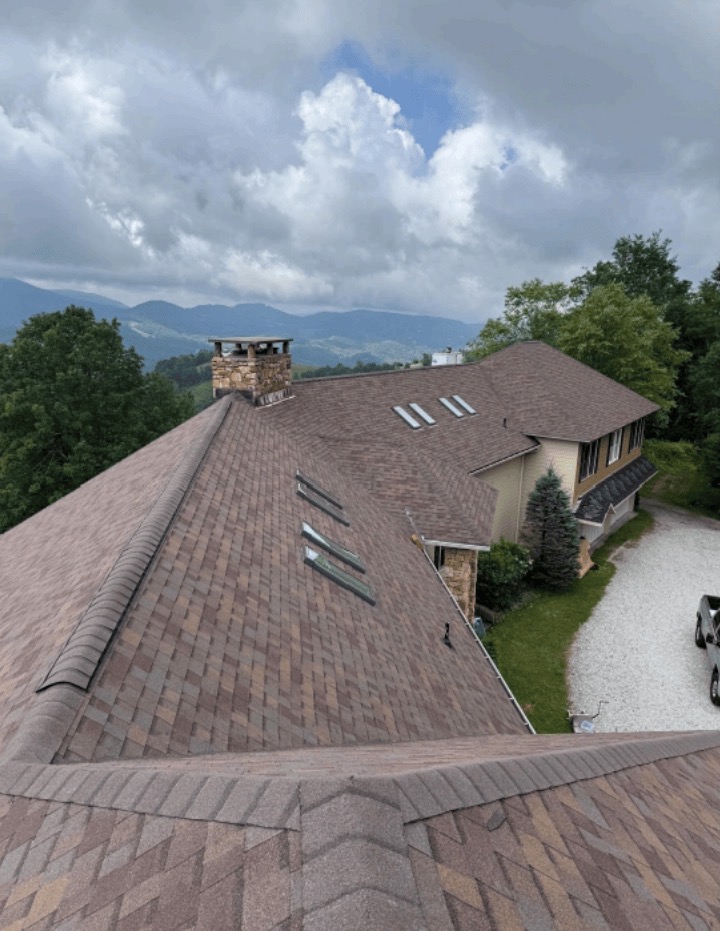
Understanding why your roofing and gutter systems are the most critical — and most neglected — parts of any building in the NC High Country, and what it costs when they fail.
Most homeowners and building owners think about their roof exactly once — when there's already a problem. By then, a minor issue that could have been fixed for a few hundred dollars has usually become a structural situation costing many thousands. The pattern repeats across Northwest NC year after year, and it's almost always preventable.
In the High Country, that neglect timeline is compressed. Elevation, heavy snowfall, intense freeze-thaw cycling, and above-average rainfall put enormous stress on roofing and gutter systems that were often built — or installed — without accounting for mountain conditions. The result is that roofs fail faster and damage spreads faster than it would at lower elevations.
This page exists to give you the information you need to make smart, proactive decisions about two of the most important and most frequently neglected building systems on your property.
Your roof is the primary barrier between the interior of your building and the exterior environment. Every other system in your home — your insulation, your framing, your interior finishes, your HVAC performance, your indoor air quality — depends on that barrier staying intact and performing as designed. When the roof fails, everything downstream eventually fails with it.
Roofs don't fail all at once. They fail incrementally — a cracked shingle here, lifted flashing at the chimney there, a deteriorated pipe boot seal, a compromised valley — and water infiltrates slowly, invisibly, doing progressive damage for months or years before it becomes visible inside the living space. By the time a homeowner sees a water stain on a ceiling or wet insulation in an attic, the structural damage behind and below has usually been developing for a long time.
In the High Country, that process is accelerated significantly by ice dams — a problem that plagues mountain homes and is almost entirely preventable with proper insulation, ventilation, and roofing installation. An ice dam forms when heat escaping through a poorly insulated roof deck melts snow at the warm peak, which then runs down to the cold eaves and refreezes, building up a wall of ice that forces meltwater back up under the shingles and directly into the structure below.
Water infiltration from a failing residential roof causes a cascade of damage. First comes the water staining and saturated insulation. Then wood rot begins in the rafters, decking, and wall framing. If moisture reaches the living space, drywall and ceiling materials must be replaced. If it reaches electrical systems, you have a fire risk. If it reaches a crawlspace or basement, mold follows within 24–48 hours of the wood or concrete staying wet. Full remediation of an advanced case easily reaches $20,000–$50,000 — not counting the replacement roof itself.
For business owners and property managers, the consequences extend beyond structural damage. A leaking commercial roof means business interruption — closing sections of your space or your entire operation while repairs are made. It means damaged inventory, equipment, and furnishings. It creates liability exposure if customers or tenants are affected. It generates insurance claims that raise your premiums. And it creates tenant loss if the problem is chronic and your response is slow. Commercial flat and low-slope roofs are particularly vulnerable in mountain climates because standing water — which accelerates membrane degradation — is harder to shed without proper drain design and maintenance.
Gutters are the drainage system of your entire roofing assembly. Their function is simple: collect all the water that runs off the roof and direct it safely away from the building envelope. When that function fails — through clogging, improper slope, inadequate sizing, or physical failure from ice and age — the consequences affect virtually every other system in your building and your site.
The most serious consequence of chronic gutter failure is foundation damage. When water isn't routed away from the building perimeter, it saturates the soil against your foundation walls season after season. That saturated soil creates hydrostatic pressure against basement walls, causing cracks in poured concrete, bowing in concrete block foundations, and seepage through mortar joints. In mountain terrain — where many properties are built on slopes that direct natural drainage toward the structure — this problem is amplified significantly.
Foundation waterproofing and crawlspace encapsulation are expensive remediation measures: $10,000–$40,000 is a typical range for full treatment of a High Country home with advanced moisture infiltration. A gutter system that costs a fraction of that, properly maintained, makes this outcome almost entirely avoidable.
Overflowing or failed gutters continuously expose the fascia board — the primary wood structure the gutter hangs from — to standing and running water. Fascia rot spreads to the soffit system above it and to the siding panels below it. What begins as a $400 gutter cleaning deferred for two rainy seasons can become a $4,000–$10,000 fascia, soffit, and siding replacement, in addition to the gutter work that still needs to happen.
Without gutters, rooftop runoff concentrates at the drip line in the same spots year after year — washing away topsoil, destroying planting beds, eroding soil from around foundation footings, and undercutting walkways, patios, retaining walls, and steps. This damage is gradual and easy to ignore, but the cumulative cost of repairing hardscape and landscaping damaged by decades of concentrated rooftop runoff is substantial.
Water that enters a crawlspace or basement doesn't stay isolated — it evaporates upward through the floor system, elevating interior humidity throughout the living space. Elevated humidity accelerates mold growth in crawlspace insulation and subfloor sheathing, and that mold affects the air quality in rooms above. Crawlspace mold remediation routinely costs $3,000–$10,000 before you factor in insulation replacement and air sealing. And it recurs if the gutter problem that allowed moisture infiltration isn't corrected first.
The combination of above-average rainfall, heavy hardwood leaf fall that clogs gutters rapidly, steep-pitch roofs that shed water at high velocity, and freezing temperatures that ice out gutters and downspouts in winter makes proper gutter specification, installation, and maintenance more important here than in most parts of the country. This is not a job for standard hardware-store gutters installed by a general handyman. Roofsmith sizes, designs, and installs systems built for what High Country properties actually experience.
At 3,000–5,500 feet elevation, properties in Watauga, Ashe, and Avery counties experience snow loads that can exceed 40 lbs per square foot on flat surfaces. Roofs must be designed and installed for that structural load — not just be aesthetically appropriate. Improperly fastened shingles fail. Improperly sized rafters flex and crack. Ice builds on inadequately ventilated decks and creates ice dams that drive water under the roofing system.
The High Country routinely experiences 30–50°F temperature swings in a single day during fall, winter, and spring. Every freeze-thaw cycle expands and contracts roofing materials — cracking sealants, splitting flashing seams, and opening gaps in joints that allow water infiltration. Flatland roofing materials and installation methods that perform well in moderate climates fail prematurely here because they're not engineered for the thermal stress they'll actually encounter.
The orographic lift effect — where moist air from the west is forced upward over the Blue Ridge Mountains — creates precipitation totals in Watauga and Ashe counties that regularly exceed 50 inches annually. This is significantly above the NC state average and places exceptional demands on both roofing materials (which must remain waterproof under constant wetting) and gutter systems (which must handle the actual volume of water generated by mountain storm events).
Ridgeline and elevated properties throughout NW NC regularly see sustained winds and gusts exceeding 60 mph during storm events. Improperly fastened roofing systems — underlayment, starter strips, field shingles, and ridge cap — can experience progressive wind uplift that begins at the edges and works inward over time. High-wind-rated shingle systems and proper fastening schedules aren't optional here; they're required for long-term performance.
The dense hardwood canopy across NW NC — oaks, maples, tulip poplars, and sycamores — means gutters fill rapidly with leaves, seeds, and debris. Without guards or regular maintenance, gutters become blocked in a single fall season, causing overflow, ice dam seeding, and fascia saturation throughout winter. Lichen and moss find ideal conditions on shaded roof surfaces that stay damp — spreading slowly but significantly accelerating shingle degradation when left untreated.
Mountain homes are designed for snow shedding and aesthetic harmony with their landscape — steep pitches, complex multi-plane roofs, dormers, valleys, and metal accents are standard. This architecture creates specialized installation requirements that general contractors and out-of-area roofers often handle incorrectly. Working safely and precisely on a 12/12 or 14/12 pitch requires specialized equipment, training, and daily experience that only High Country roofing specialists possess.
Inspect roof surface for winter damage — look for lifted shingles, cracked caps, and damaged flashing. Clean gutters of all winter debris and flush downspouts. Check fascia boards and soffit panels for softness or discoloration. Clear any lichen or moss before it spreads. Inspect caulking around all penetrations — chimneys, skylights, pipe boots — and reseal any that have cracked or separated over winter.
Inspect the roof surface after any significant hail or wind event — even minor storms can cause impact damage that's invisible from the ground. Check attic ventilation is unobstructed ahead of hot weather. Inspect gutter hangers and spike-and-ferrule connections for loosening. Clear nests and summer debris from gutter runs and downspouts. Check all sealants for UV deterioration.
The most critical maintenance season. Clean gutters thoroughly after peak leaf fall — clogged gutters heading into winter create ice dam seeding and winter overflow that causes significant fascia damage. Inspect and repair all flashing and sealants before freeze season begins. Install or test heat cables on vulnerable runs. Check attic insulation and ventilation before winter. Have your roof professionally inspected if it's been more than two years.
Monitor for ice dam formation along eave lines after heavy snow events — visible as ridges of ice at the roof edge. Do not use sharp tools, ice melt products, or high-pressure water on shingles. Carefully clear heavy snow accumulation from low-slope sections if safe to do so. For active interior leaks in winter, call immediately — interior water damage from a winter roof leak can be severe, and temporary tarping is available while waiting for conditions to allow permanent repair.
Have a qualified roofing contractor conduct a full inspection of your roof and gutter system once per year. A professional can identify issues from the roof surface — not just from the ground — and catch developing problems at the $200–$500 repair stage before they reach the $5,000–$20,000 damage stage. Roofsmith provides free inspections for clients on maintenance programs.
Keep records of your roof installation date, the material installed, any repairs made, and your gutter system components. Know your manufacturer warranty terms and what actions void coverage. Most mountain roofs in excellent condition need replacement at 20–25 years for shingles, 40+ years for metal. Planning ahead for replacement before it becomes an emergency avoids premium pricing and rushed decisions.
Some roof and gutter maintenance tasks are within reach of a careful homeowner — inspecting from the ground with binoculars, clearing visible debris from gutters from a stable ladder, or noting symptoms and documenting them with photographs for a contractor review. But many situations require a trained professional with proper equipment, and trying to handle them without that experience creates safety risks and often makes problems worse.
Any inspection or work that requires walking a roof steeper than a 4/12 pitch. Any work at heights above one story without proper fall protection. Any suspected structural damage to rafters or decking. Any active interior water infiltration — even in winter. Any situation involving flashing repair at chimneys, walls, or skylights. Any post-storm assessment where you suspect hail or wind uplift damage. Any gutter system that's more than 10–15 years old and hasn't been inspected.
Active interior water infiltration during or after a rain event, visible structural sagging in any section of the roof, ice dams causing water infiltration into living spaces, gutters that have completely separated from the fascia, and any post-storm damage where your property may qualify for an insurance claim. Time matters in all of these scenarios — delay amplifies damage and expense.
Roofsmith provides free roof and gutter inspections for homeowners and businesses throughout Northwest NC. We'll tell you honestly what we find, what it means, and what your options are — with no pressure and no obligation. Call us and we'll schedule a time that works for you.
Full details on our residential and commercial roofing services — replacements, repairs, metal systems, storm damage, inspections, and all materials we install in the High Country.
View Roofing ServicesComplete guttering services for residential and commercial properties — seamless installation, gutter guards, downspout routing, cleaning, repairs, and commercial drainage systems.
View Guttering ServicesWe serve all of Watauga, Ashe, and Avery counties plus portions of Wilkes and Caldwell. See the full list of communities we cover across Northwest North Carolina.
View Service Area